For Engineering Teams
When Agents Hit Your Site, They Don't Get 404s—They Get Parse Failures
AI browsers like ChatGPT Atlas and Perplexity Comet are attempting transactions on your site right now. If auth flows break or checkout fails, you'll never see the error—because your observability stack wasn't built for autonomous agents.
The Observability Gap
The Technical Shift Your Stack Wasn't Built For
Your monitoring stack tracks uptime, latency, and error rates. But it can't tell you whether autonomous browsers can execute multi-step flows through your app. That's the gap Geck fills.
1247% YoY increase in agent transactions
Autonomous browsers are production traffic, not edge cases. Your flows need to handle them.
W3C Agent Protocol under active standardization
The agentic web is getting formal specs. Early adopters shape the standard—late movers retrofit.
Zero visibility in traditional monitoring
APM tools track request/response. They don't catch when agents can't parse your checkout or complete OAuth.
The Traffic You're Not Tracking
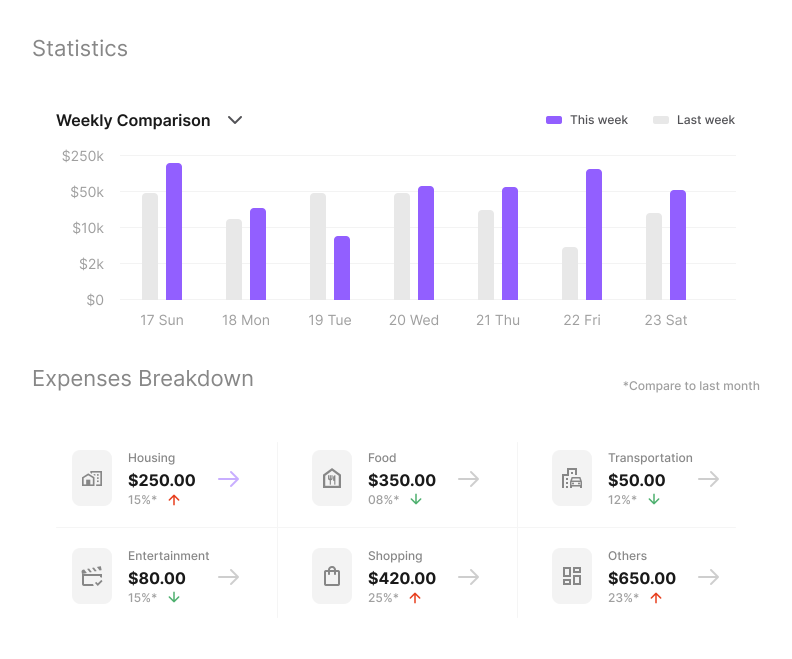
Your Monitoring Shows 200s. Agents See Failures.
APM tools track server health, not whether autonomous browsers can execute multi-step flows through your app.
→ HTTP Success ≠ Agent Success
Your API returns 200 OK. But if schema is malformed or checkout button lacks semantic markup, agents can't proceed. Request succeeds, transaction fails.
→ Auth Flows Break Silently
OAuth redirects, MFA prompts, CSRF tokens—built for human browsers. When AI agents hit these, they abandon. No error logged, no alert fired.
→ Bot Protection Blocking Good Traffic
Your WAF treats GPTBot like a scraper. Cloudflare Bot Fight Mode blocks legitimate AI browsers. You're 403'ing high-intent traffic by default.
→ No Regression Testing for Agents
You test in Chrome and Safari. Who's testing in Atlas? New deploys break agent compatibility with zero warning until traffic drops.
What AXO Actually Tests
Agent-UX QA + Machine-Readable Design Validation - Done For You
Think of it as Lighthouse for AI browsers. We test the technical surface area that determines if agents can transact.
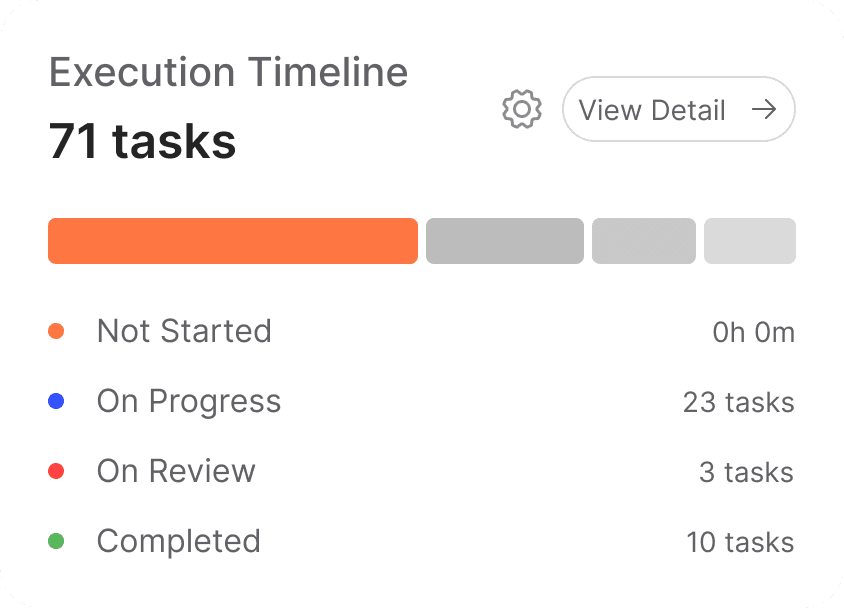
→ Machine Readability & Parsing
Semantic HTML, ARIA structure, schema.org JSON-LD syntax. Do agents extract product data, prices, availability? Is schema valid or throwing parse errors?
→ Actionability & Flow Resilience
Can agents navigate auth, handle cookies/CSRF, complete checkout? Do action endpoints have predictable state transitions? Are forms bot-accessible?
→ Anti-Automation Compatibility
Are rate limits reasonable? Do CAPTCHAs block read flows? Does your WAF whitelist verified AI browsers? Are CORS policies too restrictive?
→ W3C Agent Protocol Compliance
Agent-sitemap.json spec. Structured action definitions. Intent-rich affordances. The emerging standard for agent discoverability and execution.
How AXO Secures Your AI Traffic
Ship-Ready Specs That Instantly Enable Better Agentic Browsing
Every finding includes implementation guidance: schema examples, code snippets, before/after comparisons your team can ship same sprint.
→ Agent-Sitemap.json Generator
Machine-readable task index auto-generated from your site. Enumerates flows agents can execute—login, search, checkout. W3C-aligned spec format.
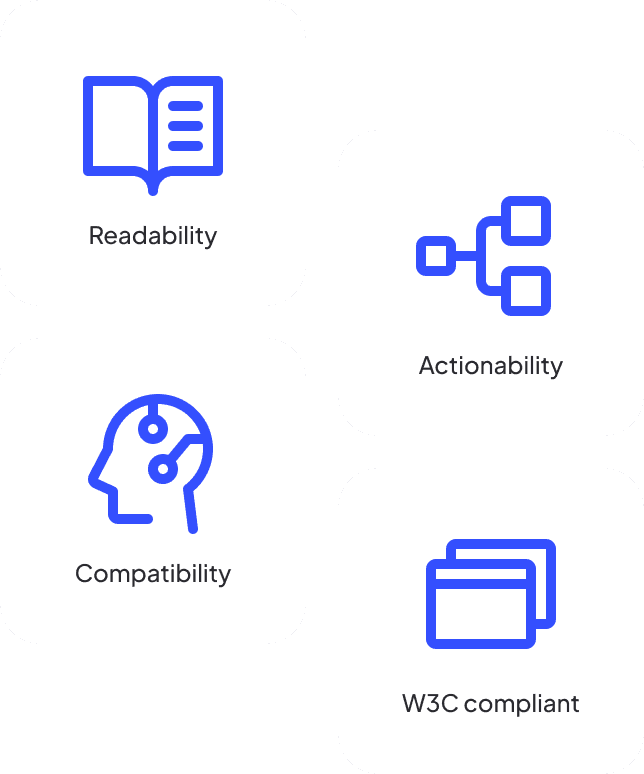
→ 100-Point Technical Scorecard
Visibility (50pts): crawler access, schema coverage, semantic structure. Interaction (50pts): flow completion, auth handling, affordance quality. Board-ready metric.
→ Prioritized Fix List with Impact
Issues ranked by agent sessions blocked and engineering effort required. "Fix schema.org Product markup: 2,300 sessions/month, 4 story points.
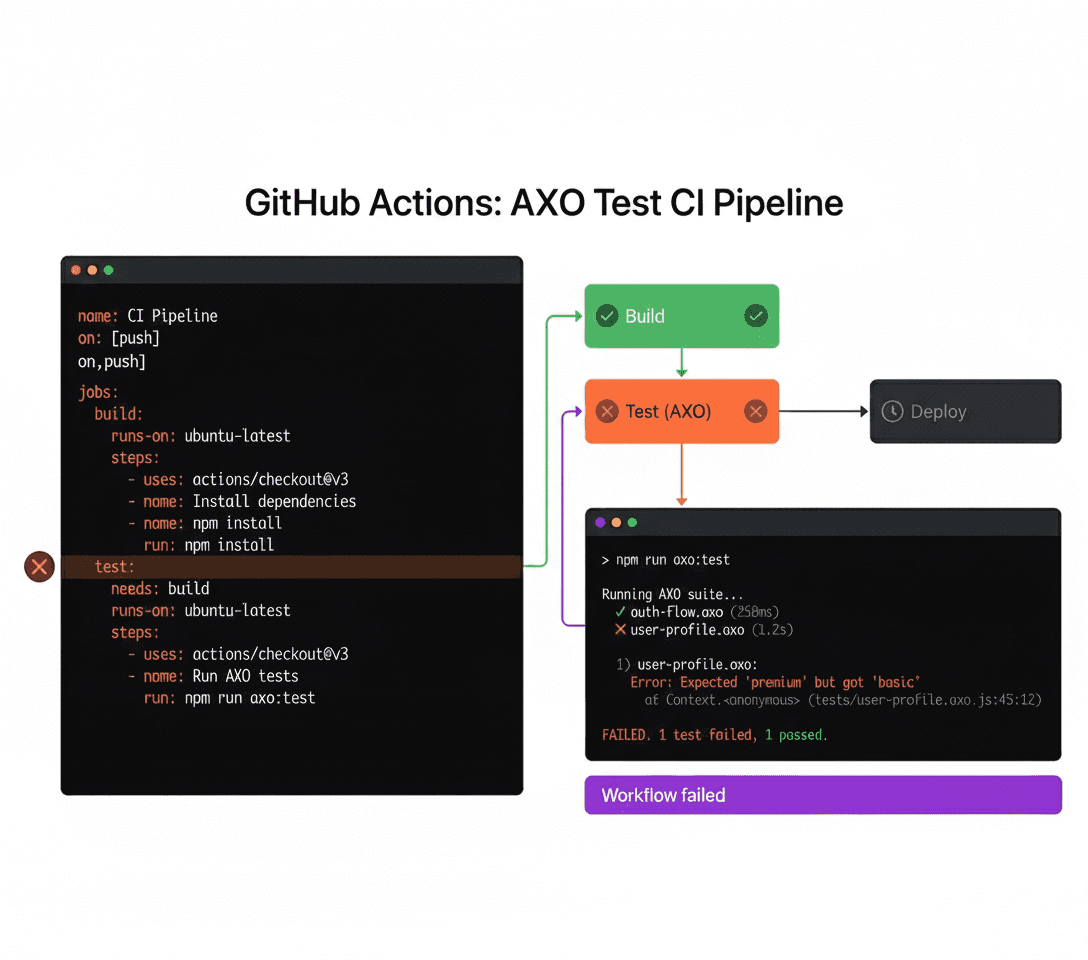
→ CI/CD Regression Pack
Automated agent flow tests in Playwright/Selenium. Runs on every deploy. Catches checkout breaks before production—agent traffic protected like Chrome users.
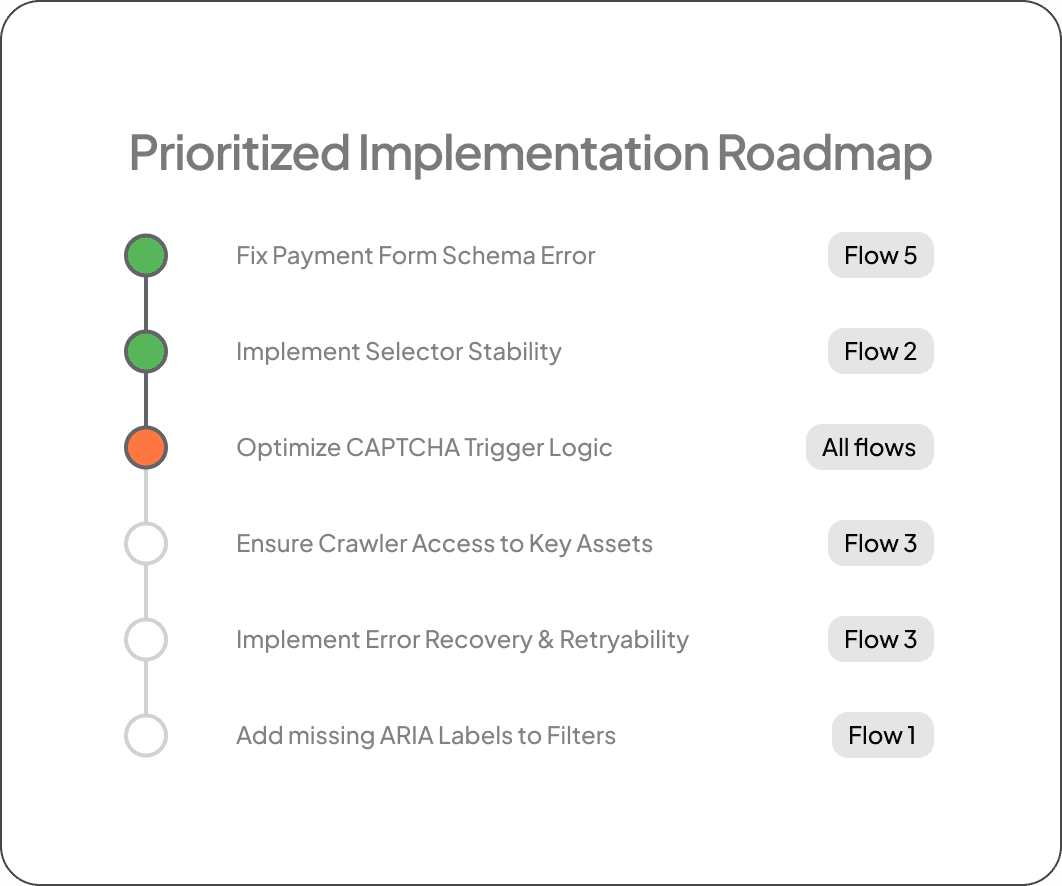
How AXO Secures Your AI Traffic
Built for Engineering Workflows,
Not One-Time Audits
One-time audit is table stakes. The real value is continuous compatibility monitoring as your codebase evolves.
→ Continuous testing for agentic flows of your website
Automated agent flow validation on every commit. Run against staging or production. Get pass/fail results before merge.
→ Observability Layer for Agents
Track agent vs human traffic separately. Monitor GPTBot/PerplexityBot completion rates. Alert when agent success rate drops below threshold.
→ Deploy-Time Regression Detection
Before/after comparison on every deploy. "Build #847 broke agent checkout—schema validation failing on line 43." Catch it before merge.
→ Programmatic API Access
Pull AXO Score and flow metrics via REST API. Instrument dashboards, trigger alerts, feed data to your BI stack. Real-time agent health.
— VP Engineering, E-commerce Platform | 8M monthly sessions